
Lewis County Court Record Requests
Lewis County publishes no official trial-record search page. It offers no standard copy-order form either. So requests start with what you can gather yourself: case number, court, party names, and the document's title or date. From there, route it by court. The Circuit Court Clerk keeps Circuit, Criminal, and General Sessions records and minutes. Chancery and Probate files belong to the Clerk & Master. A Hohenwald ordinance file stays with the City Court Clerk. A quick phone call confirms the custodian first. It also confirms current instructions before any money or personal details change hands. A counter visit lets you inspect records where access is allowed. The offices list email addresses. Neither states that email or postal mail completes a copy order, so ask first. Tennessee Public Case History helps only when a case reached an appellate court.
- Identify the court, case number, document, and date range.
- Call the Circuit Clerk at 931-796-3724 or Clerk & Master at 931-796-3734.
- Ask whether inspection, email inquiry, mail, or an in-person request is accepted.
- Specify a plain copy, certified copy, docket sheet, judgment, or filed paper.
- Confirm the current fee, payment method, identity rule, delivery method, and turnaround.
- Visit the proper counter at 29 West Main Street when remote fulfillment is unavailable.
- For an appeal, check Public Case History, then confirm any trial document with the local clerk.
Two Lewis County Record Counters
Which counter you visit matters more than the address on the building. Barbara Hinson's Circuit Court Clerk office holds the records and minutes for Circuit and General Sessions courts. It also collects General Sessions and Criminal Court fines. Kaitlin Bates, the Clerk & Master, keeps the Chancery rule and execution dockets. Her files also hold minutes, pleadings, exhibits, process, appeal records, and Probate administration files. Both sit inside the Justice Center. One counter cannot be assumed to hold the other's file. The County Clerk at 110 North Park Street is a different office entirely. It handles titles, registration, marriage licenses, and business tax. A short call to the right clerk first saves a wasted trip to the old courthouse. You avoid traveling for a record actually kept at the Justice Center.
Lewis County Circuit Court Clerk
29 West Main Street
Hohenwald, TN 38462
931-796-3724
Monday-Friday, 8:00 a.m.-4:00 p.m.
Lewis County Clerk & Master
29 West Main Street
Hohenwald, TN 38462
931-796-3734
Monday-Friday, 7:30 a.m.-4:00 p.m.
Kinds of Court Records
A docket is the dated index of events in a case. It rarely equals the whole file. Behind it sit pleadings, issued process, signed orders, judgments, and admitted exhibits. A certified copy is simply the clerk's authentication of a copy. It is not a different set of facts. Name the exact product you need when you ask. Staff can then quote the correct charge and pull from the right source.
- Docket sheets, rule dockets, execution dockets, and minute entries
- Complaints, petitions, answers, motions, summonses, and subpoenas
- Signed orders, judgments, disposition papers, and appeal records
- Chancery and Probate filings, including estate and guardianship papers where public
- Exhibits and transcripts when filed, public, and held by the requested office
A transcript is a different animal. The court reporter prepares it, and it is not the same thing as the clerk's minutes or docket. Rates and reporter contacts for Lewis County are not published, so the clerk may need to tell you who covered the hearing.
Lewis County Docket Versus Document
This distinction clears up a common records snag. A docket entry may say an order was entered. Yet the entry alone does not reproduce the order's text. Likewise, a Public Case History event may link an appellate PDF. The actual Lewis County trial judgment still sits in the trial clerk's file. For official use, request the trial document itself from the clerk who keeps the original.
| Record product | What it provides | Best request |
|---|---|---|
| Docket or minutes | Chronology, settings, filings, and status | Ask for the current docket sheet or minute entry |
| Filed document | The text of a pleading, order, judgment, or exhibit | Name the document and filing date |
| Certified copy | A clerk-authenticated reproduction | State why certification is needed and ask the fee |
Court Records: What They Contain
What a file holds depends on the court and the case type. Tie your request to a case number and a specific filing. General Sessions and Circuit records may show citations, warrants, summonses, settings, minutes, and the final action. Chancery files add rule-docket and execution entries. Probate files can include estate administration, claims, guardianship, conservatorship, and accountings, subject to access limits.
| Case identifier | The local docket or case number and court name |
|---|---|
| Case style | The caption and public party roles |
| Docket entries | Dated filings, settings, minute events, and procedural status |
| Pleadings and process | Petitions, answers, motions, summonses, warrants, or writs |
| Orders and judgment | Signed rulings and the court's final disposition |
| Record on appeal | Prepared trial material transmitted when an appeal is taken |
No Lewis County Copy Form
No certified-copy web form appears on the county, clerk, AOC, or city pages. Nor does a public-record request PDF. That does not mean copies are unavailable. It means the request format, identity requirement, payment route, and processing time must be confirmed directly with the office. An email address on an office page is not an invitation to send a check or sensitive data.
Prepare a precise request: Include requester contact details, court, case number, case style, document title and date, plain or certified choice, delivery preference, and a request for current payment instructions.
Older files may live in docket books, indexes, paper storage, microfilm, or an archive rather than a modern system. Ask the office. Lewis County court activity moved among county seats and buildings over the years. Need a historical lead? The Lewis County Public Library and Archives can help. But it cannot replace the trial clerk for a certified court copy.
Copy Fees and Certification
The Circuit Court Clerk posts two plain copy rates. A regular copy runs $0.50 per page. A certified copy costs $5.00 plus $0.50 per page. Ask whether certification is charged per document and whether all pages must be copied, and do not assume those rates apply at the Clerk & Master or Hohenwald City Court.
| Item | Known amount | Qualification |
|---|---|---|
| Regular Circuit Clerk copy | $0.50 per page | Posted local FAQ |
| Certified Circuit Clerk copy | $5.00 + $0.50 per page | Confirm charge per document |
| Certified docket sheet | Not published | Ask the holding clerk |
| Chancery public-record computer search | Amount not safely extracted | Current fee sheet has a line item |
| Transcript | Not published | Request a quote from the reporter |
Don't assume the courts take the same payment methods as the County Clerk does for vehicle and county services. Each court clerk sets its own rules for the docket copies it sells. Before you order, ask about cash, check, card, mail payment, and any return-postage requirement.
Lewis County Appellate Record Trap
Tennessee Public Case History searches Supreme Court, Court of Appeals, and Court of Criminal Appeals matters. It does not cover Lewis County trial cases. Still, its case detail can be revealing. You may see the trial court, trial judge, trial number, milestones, party roles, event history, record information, and selected PDFs. Per the official help, qualifying appeals include records filed after September 1, 2006. Data is current through the prior business day. The official civil appellate case interface shows those event and record fields in practice.
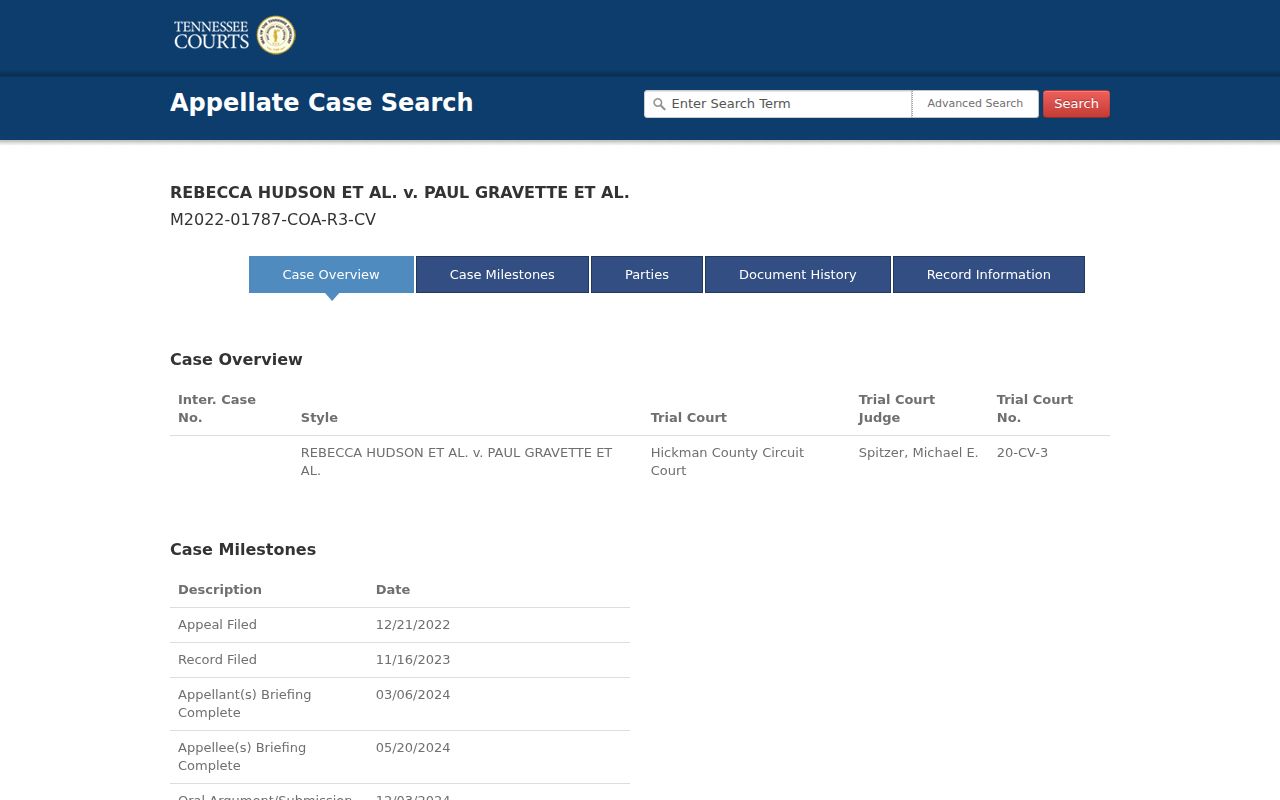
That screen can confirm an appeal and its trial number. What it cannot do is put every Lewis County pleading or judgment online. The official appellate detail interface lays out event history and record categories, which is a workable start when the document you need still lives in the trial court's file.
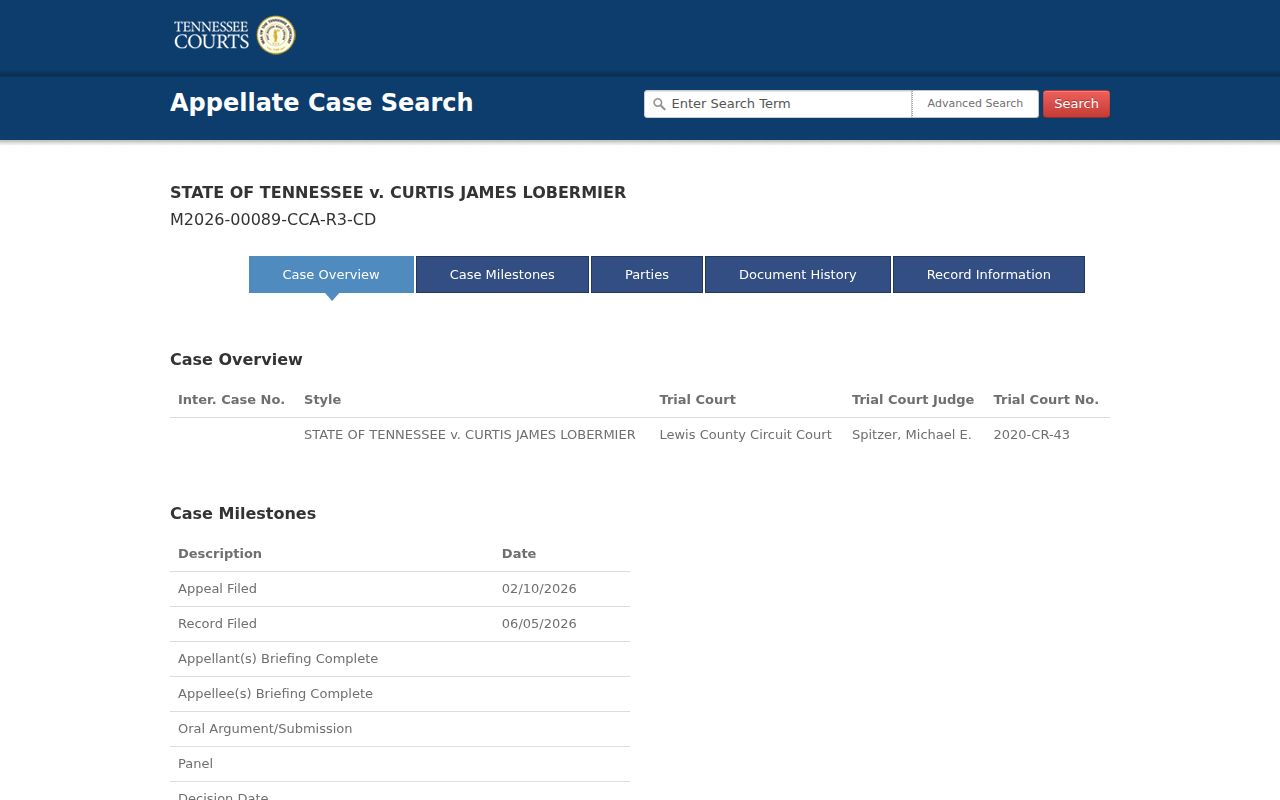
When the item you need is a local pleading or judgment, use those fields to route the request to the right Lewis County trial clerk. That is usually faster than hoping an image of it exists somewhere online.
Access Rules for Court Records
Tennessee Supreme Court Rule 34 governs public access to court records. It sorts records into case, administrative, and judicial categories. Even so, statutes, court rules, redaction, and sealing orders can still limit what you see. For civil files, Tennessee Rule of Civil Procedure 1A starts from a presumption of openness. A serious and substantial interest must require sealing. And nothing less restrictive can protect that interest.
Key access rules:
Tennessee Supreme Court Rule 34 provides the statewide framework for public court records and recognized exceptions.
Tennessee Rule of Civil Procedure 1A supplies the civil sealing standard.
Tennessee Juvenile Rule 114 closes dependency-and-neglect proceedings and sets standards for other juvenile proceedings.
A public docket entry does not guarantee full access. Sealed exhibits, protected personal data, juvenile material, and expunged records may all be off limits. A missing result can point to the wrong court. It may also mean an old number or an archived file. Ask the clerk to explain access status rather than protected contents themselves. The Tennessee AOC expungement resource describes how expungement requests begin. They start in the originating court. The docket number drives the process.
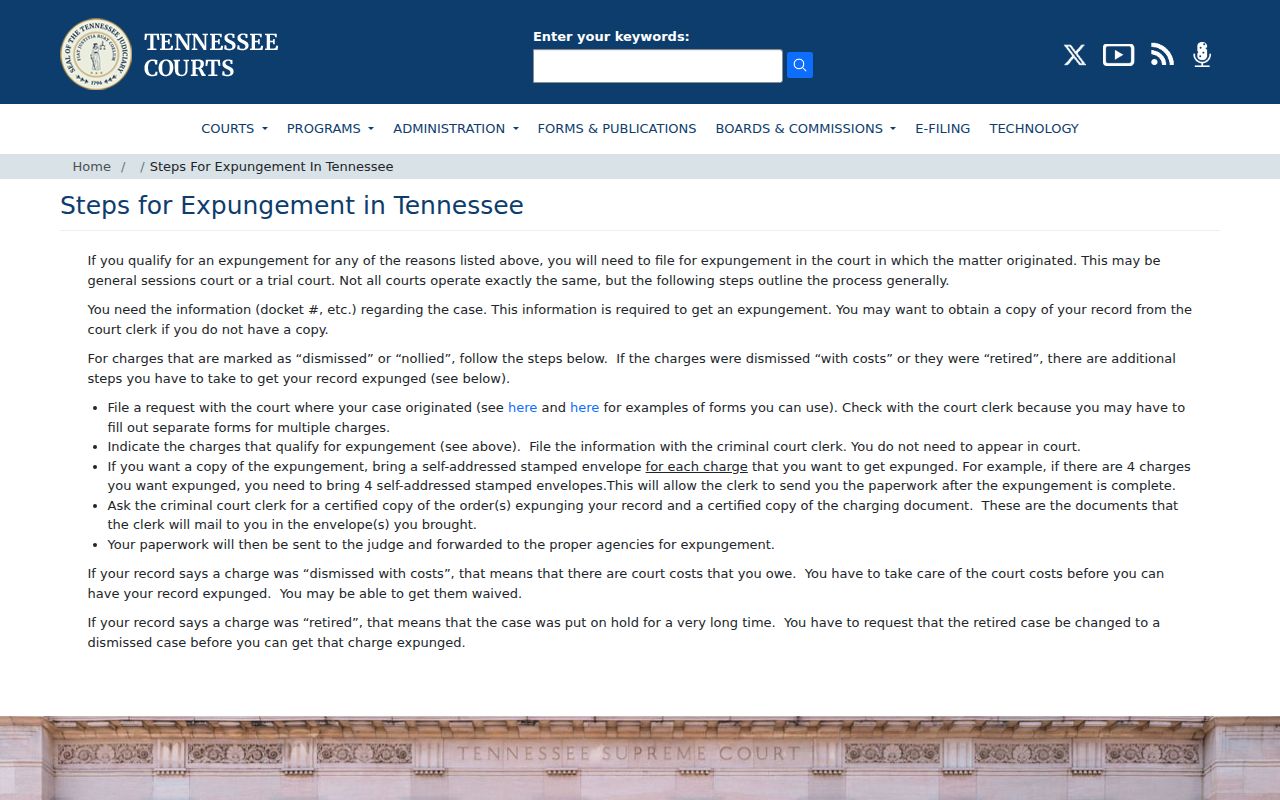
That process shows why the originating Lewis County court controls the record and the certified order. The related TBI and AOC material answers common questions about local filing and how orders are distributed.
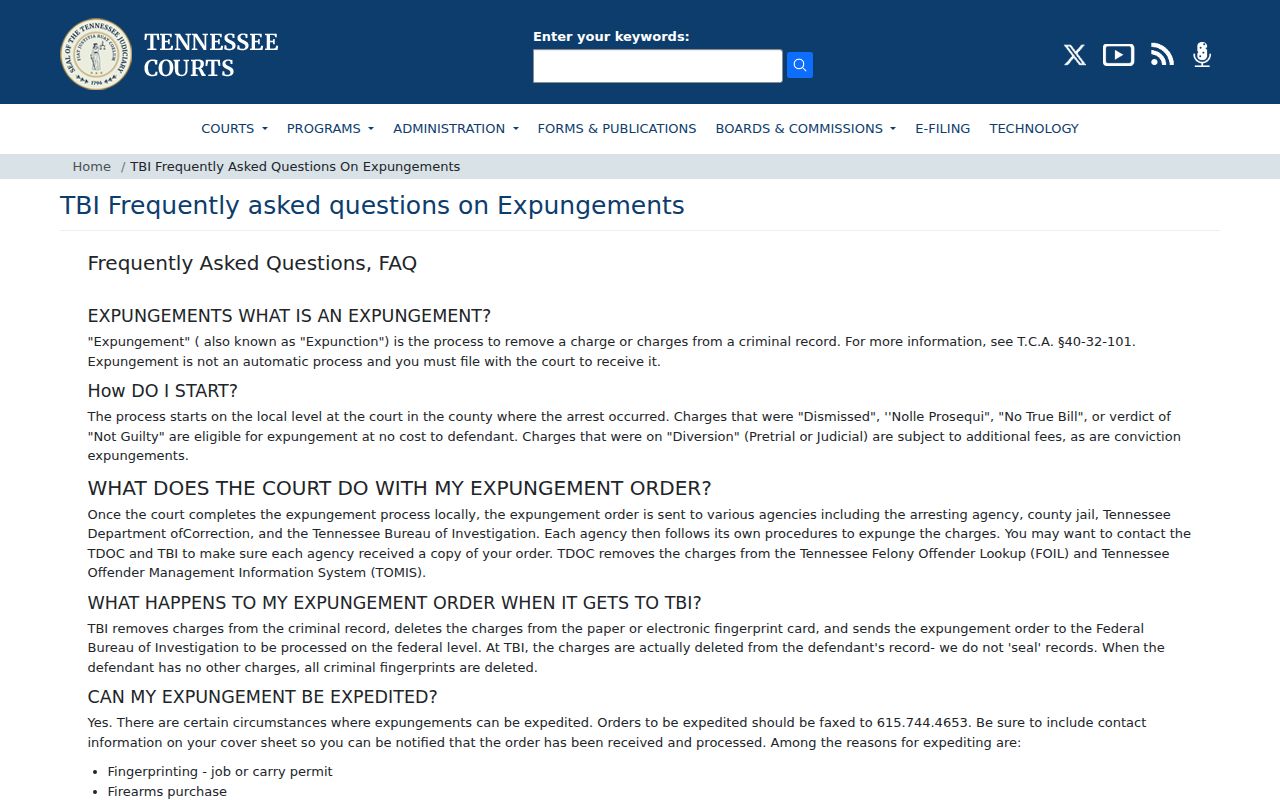
Eligibility and current costs still need confirming, since record status depends on the case. The official Juvenile Rule 114 page sets out the special confidentiality rules that govern juvenile proceedings.
That rule is why a Lewis County juvenile record may not follow the same public path as a normal civil or criminal file. Expect tighter limits and ask the clerk first.
If Lewis County Cannot Find It
Start with the basics. Check the spelling of the name, the court level, and the case number. Confirm whether the matter is municipal, General Sessions, Circuit, Criminal, Chancery, Probate, or Juvenile. Then ask if the case was transferred, appealed, sealed, expunged, or archived. A trial document can exist even then. It may never show up in Public Case History.
For a historical file, start with details. Give the clerk the year, the parties, the court, and the type of record. Ask whether an older index or an off-site source must be searched by hand. Want a transcript? Contact the reporter instead of treating the docket as one. Silence from one database proves nothing. A Lewis County record may still exist.