
Lewis County Criminal Docket Searches
There is no general online search form for criminal cases here. The working route runs through the Lewis County Circuit Court Clerk. That office maintains Circuit and General Sessions records and minutes, issues court process, and takes in General Sessions and Criminal Court fines. Gather the defendant's full name, the court, a rough year, and any case, citation, or warrant number before you call. An exact identifier lets the clerk separate people with similar names and keeps a lower-court file from being confused with a later Criminal Court file.
Tennessee's Public Case History database only covers appeals. It will not surface the underlying Lewis County trial docket. Use it if a case reached the Court of Criminal Appeals or the Supreme Court. Otherwise, work the local route:
- Read the citation, warrant, service papers, bond paper, or court notice and identify the named court.
- For Circuit, Criminal, or General Sessions records, call the Circuit Court Clerk at 931-796-3724.
- Ask the clerk to check the name and exact number in the correct court and year.
- Confirm the current status, next setting, disposition, and whether a later court number was assigned after bind-over.
- Ask how to inspect the file or order a plain or certified copy before sending payment or personal details.
Calling for a Lewis County Criminal Docket
Lewis County offers no online criminal search. The clerk's counter is the local access point. You will find it at the Lewis County Justice Center, 29 West Main Street, Hohenwald. Posted hours are 8:00 a.m. to 4:00 p.m., Monday through Friday. The office lists barbara.hinson@tncourts.gov. Its page never says email or mail can complete a copy order, so call first to confirm how to submit a request and pay.
State directories help you double-check who holds a docket. The Tennessee AOC trial-court clerk directory lists clerks across the state.
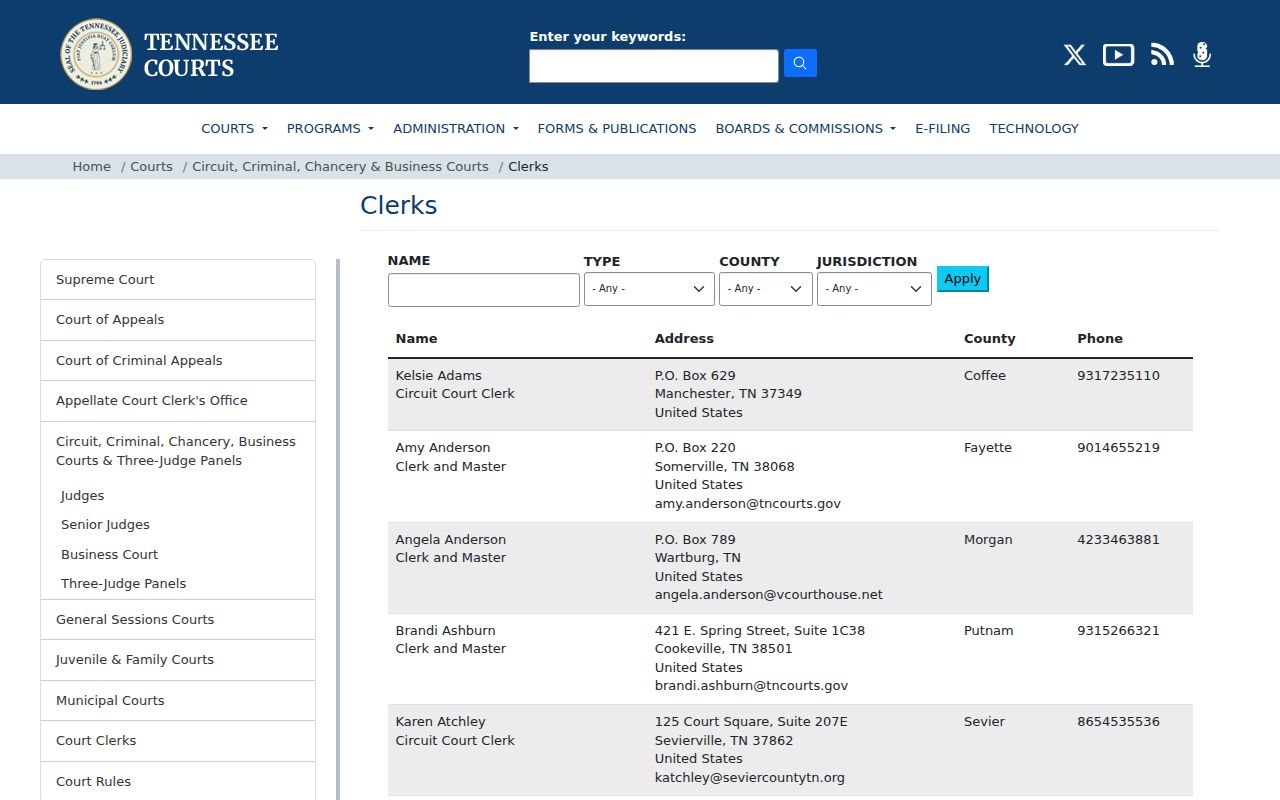
That directory confirms the routing, nothing more. For live trial status, available documents, and the current copy procedure, the Lewis clerk is still the source.
Criminal Dockets: What They Show
A Lewis County criminal docket is an index of events. It is not a transcript, and it may not include downloadable papers. Start with the court and case number, then read the dated entries in order. The county publishes no local code manual. So ask the clerk about any abbreviation you do not recognize rather than guessing at its meaning.
| Case number | An official appellate detail displayed the Lewis trial number 2020-CR-43, but this is one observed example, not a universal format. |
|---|---|
| Charge | The alleged offense and related count or classification; an indictment is an accusation, not a conviction. |
| Parties | The State of Tennessee, the accused person, and attorneys of record. |
| Settings | Appearances, preliminary hearings, motions, plea settings, trial dates, sentencing, and later resets when entered. |
| Disposition | A dismissal, nolle prosequi, plea, conviction after trial, acquittal, diversion, or another recorded outcome. |
| Later activity | Sentence, costs, bond action, probation matters, notice of appeal, and transfer of the appellate record when applicable. |
Two Lewis County Criminal Dockets
The court name tells you which file you need. General Sessions handles the entry layer for most Lewis County criminal matters. It can hear misdemeanors when jury and grand-jury rights are waived. It also runs preliminary hearings in felony cases. A felony that gets bound over then moves into the Criminal Court stream. Per the Lewis County FAQ, General Sessions Criminal dates are given with service papers or while the person is in custody. After bind-over, the clerk mails Criminal Court notice.
The AOC profile for Circuit Judge Michael E. Spitzer covers the judgeship. It places Lewis County in Tennessee's 32nd Judicial District.
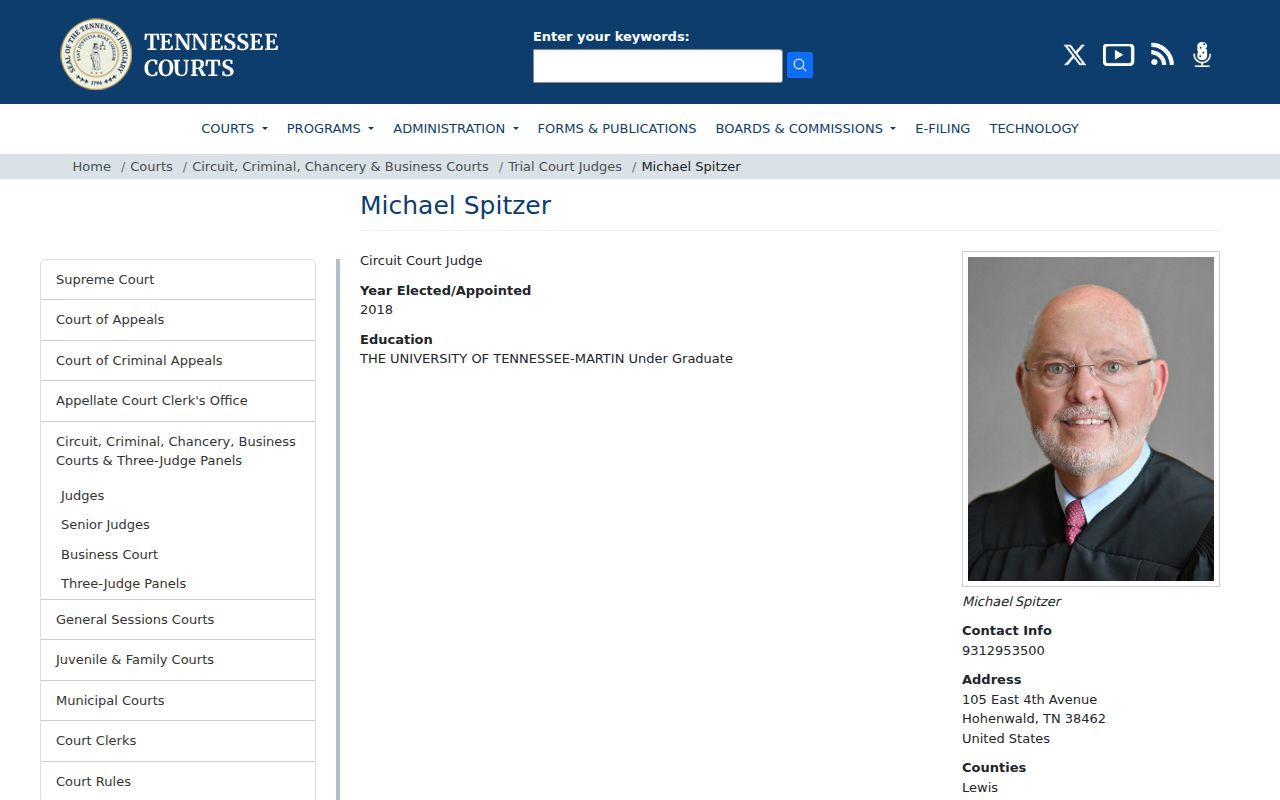
That district detail matters for older papers citing the former 21st District. It does not change the first step. Search with the court and number printed on the latest official notice.
Criminal Case Stages on the Docket
Read the docket's dated line to see what happened versus what was only scheduled. An initiating paper may come first. Next may follow an appearance, a bond entry, then a General Sessions preliminary hearing. A bind-over or indictment opens the Criminal Court phase. Motions and pretrial settings can pile up before a plea or trial. The final merits event stands apart from sentencing, costs, later probation activity, and any appeal.
Docket flow: Charge Filed › Arraignment › Preliminary Hearing › Bind-Over or Indictment › Pretrial › Plea or Trial › Disposition › Sentencing › Appeal
A setting proves nothing about whether a hearing actually occurred. A bond-forfeiture entry decides no one's guilt. When the exact result matters, read the next dated entry and get the signed order. If the docket shows a transfer or appeal, keep both numbers. Track the Lewis trial number and the appellate number.
Lewis County Criminal Docket by the Numbers
The Tennessee AOC FY2025 report offers scale, not answers about any one person. For July 1, 2024 through June 30, 2025, Lewis County reported 414 criminal filings. It also reported 464 dispositions. The report counts charges or counts, not unique people and not necessarily unique cases. Dispositions broke down as 260 guilty pleas as charged and 21 pleas to lesser charges. Another 134 were dismissals or nolle prosequi entries. Trials produced 16 convictions, and the rest split among 10 pretrial or judicial diversions, one acquittal, and 22 other dispositions. The numbers give context only. They are no substitute for a case lookup.
These are clerk-reported workload figures. They cannot say whether a named matter is active, sealed, reset, or done. Only the individual Lewis County criminal docket and its orders answer that.
Lewis County Criminal Docket Courts
Felony trials in Lewis County sit with Criminal Court at the Justice Center. The Circuit Court Clerk holds those records. General Sessions Court carries limited criminal work, including felony preliminary hearings. Scheduling questions for the General Sessions and Juvenile judge go through the same Justice Center office at 931-796-5547. The clerk usually routes callers there. City cases run on a separate track. Hohenwald Municipal Court takes ordinance violations inside the city, such as traffic and parking tickets. Its clerk answers at 931-796-5547's municipal counterpart, 931-796-3223. A Hohenwald address alone does not make a charge a Criminal Court case. Read which court issued the paperwork. For vehicle titles, registrations, and other county services, the County Clerk at the old courthouse helps. That office does not keep the trial docket.
When a Lewis County Criminal Docket Is Missing
Expect a blank search result. Lewis County posts no public trial portal. A dead end online proves nothing about whether a case exists. Start with the paperwork itself. Check which court is named: General Sessions, Criminal Court, Juvenile Court, or Hohenwald Municipal Court. Then test the name spelling, the case year, and whether a bind-over created a second case number. The clerk can tell you whether the file is active, archived, transferred, expunged, sealed, or restricted.
Do not rely on an old date: use the latest notice, attorney communication, or clerk confirmation before appearing.
Older records may live in paper docket books, index cards, microfilm, or an archived file, so ask the office what a search requires. Copies cost $0.50 per page. Certified copies run $5.00 plus $0.50 per page. Confirm the total and how to order before you pay.
Access Rules for Criminal Dockets
Tennessee treats court case records as public, but only within legal limits. A seal order or an expungement can close off an entry or a document. So can juvenile confidentiality, protected information, or another statute. Even when a docket line stays visible, the sealed volume behind it may stay closed. If someone denies you access, ask questions. Ask which rule or order applies. Ask whether a redacted public version exists. The official Tennessee Supreme Court Rule 34 page sets out the statewide access rules.
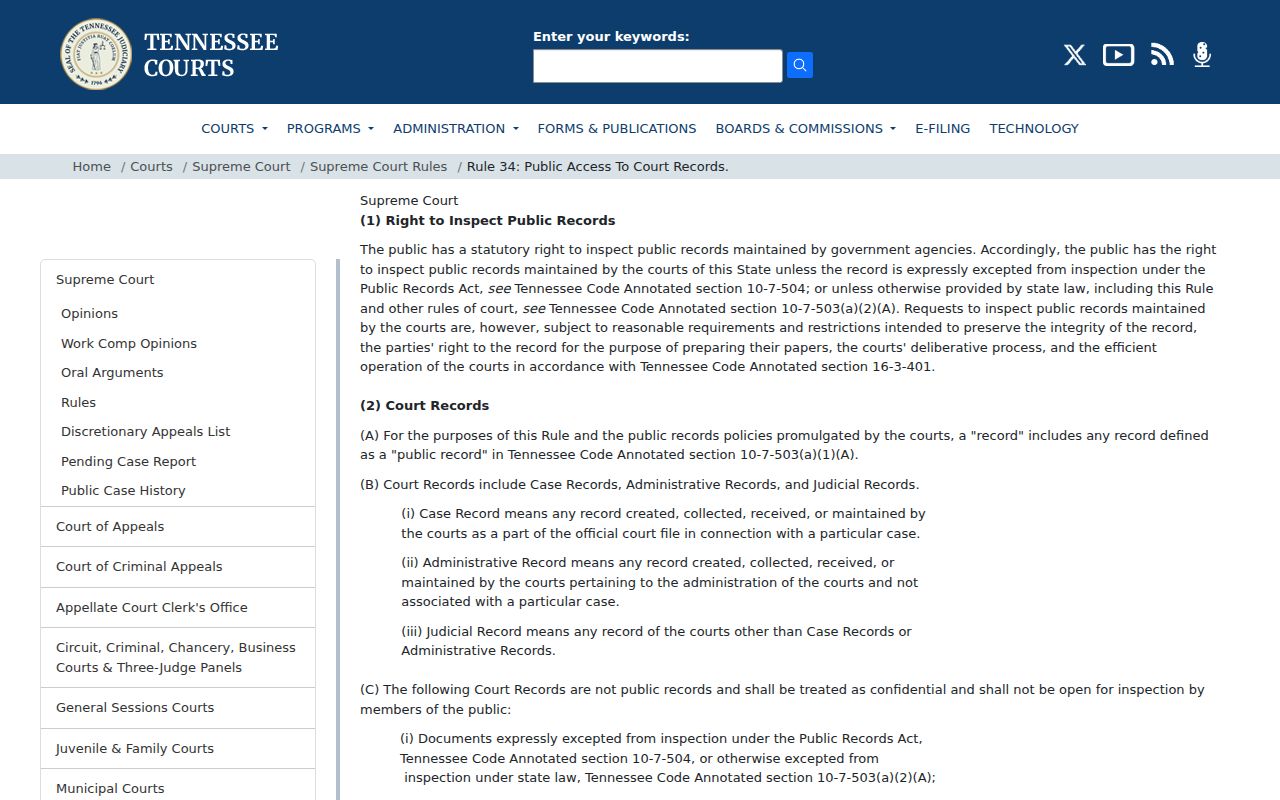
Rule 34 builds the statewide framework. The Lewis County Circuit Court Clerk applies it day to day, controlling access to the trial record held locally.
Key rules:
Tennessee Supreme Court Rule 34 generally opens case records unless a statute, rule, or court order makes them confidential.
Tennessee Juvenile Rule 114 closes dependency-and-neglect proceedings and permits limits on delinquency or unruly proceedings.
Tennessee AOC expungement guidance directs a request to the originating court and stresses use of the docket number and certified order.
Lewis County Criminal Appeal Dockets
An appealed Lewis County criminal case can resurface elsewhere. It shows up on Tennessee Public Case History. Look there for the appellate case number. The site also lists the trial court and judge, the Lewis trial number, milestones, parties and counsel, case-history events, and selected PDFs. Coverage runs to appeals with records filed after September 1, 2006. The site says its appellate data is current through the prior business day. It supplements, never replaces, the local trial file. The official sample criminal-origin appellate detail shows how that cross-reference works.
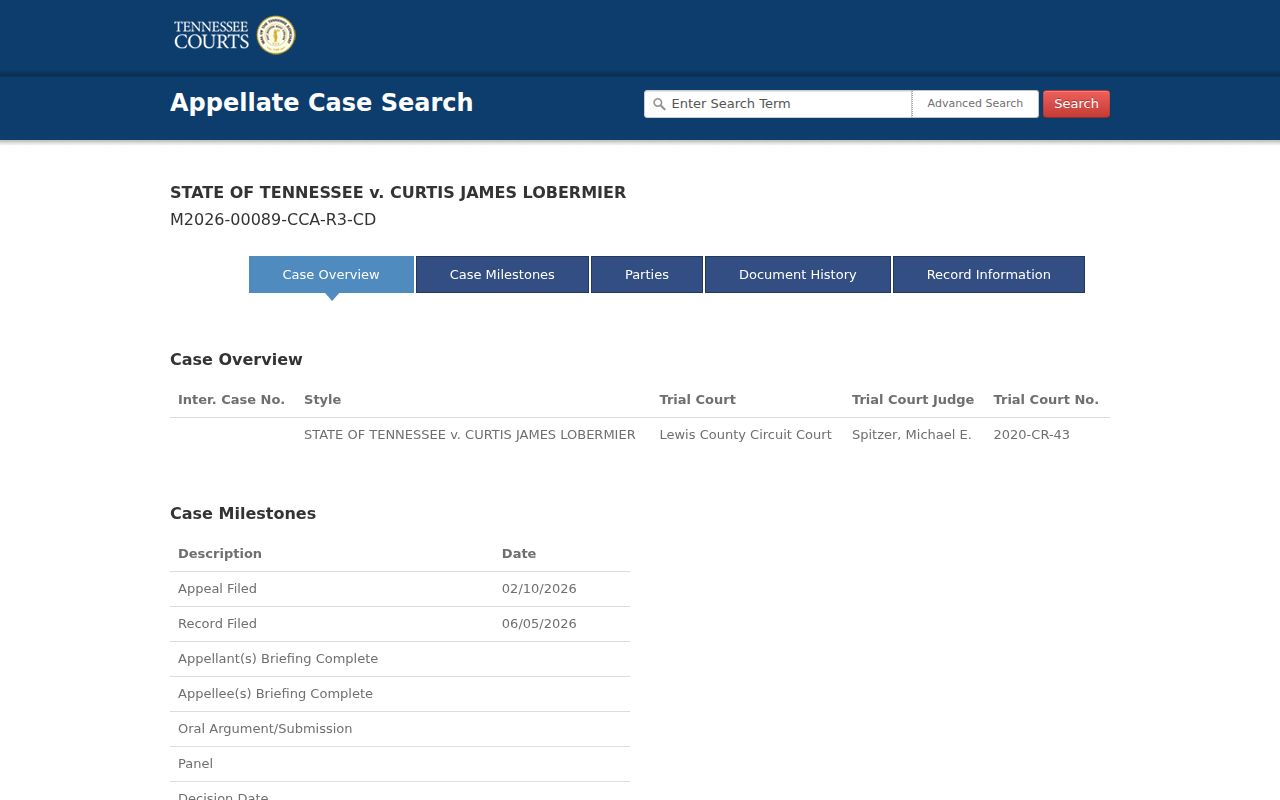
Two gaps matter on the appellate screen. It may mark a technical record as sealed, and some event rows may lack a PDF. Bond, fine, sentence, and the full originating record still live with the Lewis County clerk.